

Google Photos is convenient, but it comes with a free quota that fills up and a US company that holds your pictures. This guide compares European and privacy-focused photo backup services you can use without setting up your own server, explains what you give up (and what you don’t) compared with Google, and shows how to move your library without losing dates and albums.
Short answer: There is no single replacement for Google Photos. Pick by what matters most to you:
- End-to-end encryption with face recognition on your device: Ente. Note that Ente is incorporated in the US, with servers in Europe.
- A company based in the EU: Internxt (Valencia, Spain), zero-knowledge encryption, no AI photo search.
- Swiss jurisdiction and end-to-end encryption: Proton Drive.
- Full control, but you run the server: Nextcloud with Memories, Immich or PhotoPrism (see the last section).
Among the services checked here, AI search either runs on your device or is not offered. Prices and free allowances change, so check them with the provider before you decide. Data in this guide was last checked on 11 October 2026.
What Does “European” Mean for a Photo Service?
“European” can mean three different things, and they are not the same for your legal exposure:
- EU-based company: The company is established in the EU/EEA. Internxt, for example, says it is based in Valencia, Spain.
- Swiss company: Switzerland is in Europe but not in the EU. Proton states that it is headquartered in Switzerland.
- EU-hosted: The servers are in Europe, but the company can still be incorporated elsewhere. According to It’s FOSS, Ente Technologies, Inc. is incorporated in the US while its servers are in Europe.
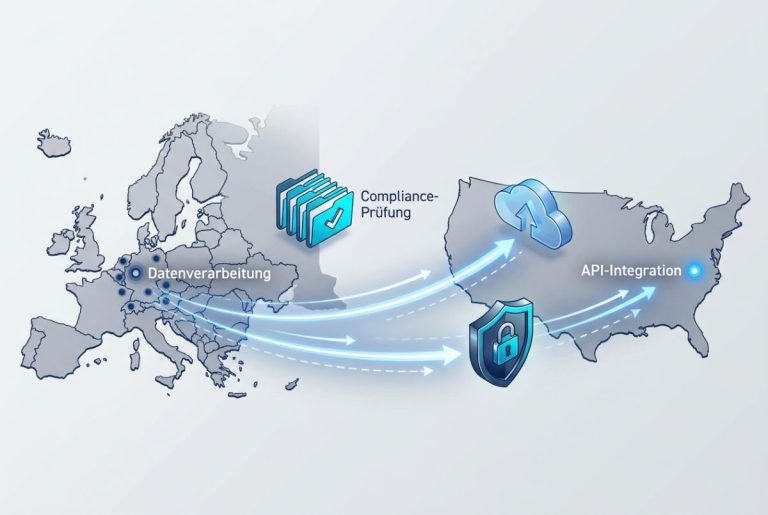
Why this matters: Google is US-headquartered. Under the US CLOUD Act (18 U.S.C. § 2713), a US provider may be required to disclose data in its possession, custody or control, even if the data is stored abroad. This does not automatically make Google Photos non-compliant with the GDPR, but it is a jurisdiction risk that some people and organizations want to avoid. The same question applies to every “EU-hosted” service: where is the company established, and who owns it?
Why People Leave Google Photos
- The free quota fills up. Since 1 June 2021, new uploads count toward the 15 GB of free storage that Google Accounts share (CNBC). Once the quota is full, you pay or delete content.
- Jurisdiction. See above. It matters most when libraries contain identifiable people, children or business-sensitive images.
- Cloud analysis. Face grouping and content search in the cloud require the service to process your image content, and they may create additional metadata.
European Google Photos Alternatives Compared
The table lists what the providers state on their own pages. “Not stated” means the provider’s page does not say, not that the feature does not exist.
| Service | Company and jurisdiction | Data location | Encryption | Face recognition and AI search | Free storage | Paid plans | Google Takeout import |
|---|---|---|---|---|---|---|---|
| Proton Drive | Switzerland | Not stated on the photo page | End-to-end | Not stated | 5 GB | Up to 3 TB, prices on the provider’s pricing page | Not described on the page |
| Internxt Photos | Valencia, Spain (EU) | “Europe and other locations worldwide” | Zero-knowledge, post-quantum | Not offered; Internxt says it does not use your photos for machine learning | Free plan exists, amount not stated | Annual or lifetime; Photos is included in the 5 TB Ultimate plan | Not stated |
| Ente Photos | Ente Technologies, Inc., incorporated in the US (per It’s FOSS) | Servers in Europe (per It’s FOSS); paid plans keep three encrypted copies across three cloud providers | End-to-end, audited by Cure53 and Symbolic Software | On your device; off by default, you switch it on | 10 GB | e.g. 50 GB for $2.99 per month | Yes, via the desktop app, including albums |
Sources: the providers’ own pages (Proton, Internxt, Ente) and It’s FOSS. Last checked: 11 October 2026.
What about the big US services? Amazon Photos, Dropbox, iCloud and OneDrive are all US-headquartered. They are a reasonable choice if cost and convenience matter more to you than jurisdiction. iCloud offers optional end-to-end encryption (Advanced Data Protection), but Apple withdrew it for users in the UK in 2025.
Encryption and AI Search: What You Trade Off
Server-side encryption means the provider holds the keys. That is what makes cloud-based face grouping and content search possible, and it means the provider can technically read your files.
End-to-end or zero-knowledge encryption means only you hold the keys. Because the provider cannot read your photos, it cannot run AI search on its servers. That does not automatically mean no AI search at all: Ente, for instance, runs face recognition and search on your device. Features that need cloud processing are the ones you lose.
Practical consequence: if your library contains sensitive personal, medical, legal or business material, end-to-end encryption is the stronger choice. If you mostly want to type “beach 2019” and find the picture, check whether the service you pick offers search on the device.
How to Move Your Library From Google Photos
Switching is rarely one click. A safe order:
- Export with Google Takeout. Select Google Photos and download all parts of the archive.
- Unzip all parts into one folder. Takeout splits large libraries into several archives.
- Understand the JSON files. Takeout does not write date, location, description and album membership into the photo files. It stores them in a separate JSON file next to each photo, as PixelUnion explains. If you upload the photos elsewhere without merging that data back in, the new service shows wrong dates and no locations or albums.
- Use an importer that reads the JSON files, or merge them yourself. Ente’s desktop app can import a Takeout folder and read the metadata files to restore dates and favorites (use the “Separate albums” option to keep albums). For other services, tools such as exiftool or google-photos-exif can write the data back into the files.
- Test with a small batch. Check dates, locations and albums on all devices before you move everything.
- Set up automatic backup on your phone and check that new photos arrive.
- Recreate shared albums. Collaborative permissions do not transfer to the new service, so albums shared with other people usually have to be set up again.
- Keep your Google library until you have checked the result. Only then delete content or reduce your Google storage plan.
For organizations planning a wider move away from US cloud services, see our guide to switching from US SaaS to European software. If you are comparing storage providers in general, the EU cloud storage checklist lists 12 questions to ask before you buy.
If You Want to Host It Yourself
This guide is about services you don’t have to run, but self-hosting is an option if you are comfortable with it. Your jurisdiction then depends on where you host.
- Nextcloud with Memories: Memories adds a timeline and albums to Nextcloud. Face and object recognition comes from the separate Recognize app, which according to the Nextcloud documentation runs entirely on your own infrastructure. It needs real resources: about 4 GB of RAM for the default backend and 10 to 20 CPU cores recommended.
- Immich: Open-source photo backup with mobile apps. The team joined FUTO in 2024 (Linuxiac).
- PhotoPrism: Open source, with no native apps of its own. You use the web app (PWA) or third-party apps such as PhotoSync (PhotoPrism documentation).
You are responsible for updates, backups and hardware, which a managed service would otherwise handle.
Individuals, Families and Businesses
Families usually care about cost per terabyte, simple sharing and automatic phone backup. Before you pick a service, check whether the people you share with need their own account. Ente, for example, says public links can be opened without an Ente account.
Small businesses care more about access control, audit logs and retention rules, especially for client project photos. For businesses, EU AI Act duties depend on the function and legal classification of a feature, not simply on AI photo tagging. See How to Evaluate EU AI Act Compliance in European AI Software.
Frequently Asked Questions
Is there a free Google Photos alternative?
Yes, with limits. Proton lists 5 GB of free storage and Ente 10 GB. Google gives 15 GB, shared with Gmail and Drive. Free allowances change, so check them with the provider.
Does zero-knowledge encryption mean I lose AI search?
You lose search that runs on the provider's servers. Search and face recognition on your own device is still possible. Ente is an example.
Can I keep my albums when switching?
Often yes, if the import tool reads the Takeout JSON files. Ente's importer can keep albums as separate albums. Shared albums with other people usually have to be recreated manually.
Do these services work with iPhone and Android backup?
Proton and Internxt state on their pages that their iOS and Android apps can back up photos automatically. Ente offers mobile and desktop apps. Check the app store listing of each service for your device before you commit.
Is Google Photos not GDPR-compliant?
Using Google Photos does not automatically violate the GDPR. Compliance depends on lawful basis, transparency, contracts, safeguards and the rules for international transfers.
Is Immich or PhotoPrism a viable replacement?
Both are open-source photo platforms with timelines and face recognition. Immich has mobile apps, while PhotoPrism uses a web app or third-party apps. The trade-off is that you handle hosting, maintenance and backups yourself.
Choosing the Right Alternative
The decision comes down to three questions. Which jurisdiction do you accept? Do you want end-to-end encryption, and are you willing to give up cloud-based AI search for it? And how important are easy sharing and automatic sync for the people around you? For families, price per terabyte and simple sharing usually decide. For businesses, documented data residency and integration with an existing European software stack matter more than convenience features.
Information on providers was taken from their own websites and from the sources linked above. Prices, free allowances and features change; check them with the provider before you buy or migrate.