
European SaaS Migration: A Step-by-Step Guide for Technical and Compliance Teams
A European SaaS migration project rarely starts with a strategy memo. It starts with a flagged clause: a data processing agreement (DPA) review turns up a sub-processor based in the United States, a vendor’s price update changes the cost calculus overnight, or an internal audit surfaces a cross-border data transfer that legal cannot defend. These triggers are operational, and they usually arrive with a deadline attached: a contract renewal, an audit remediation date, or a board question that needs an answer.
The short version: Moving business software from a provider outside the EU/EEA to a European one works best as six steps: (1) name the driver, (2) inventory systems, data flows and contracts, (3) evaluate European alternatives, (4) plan export, transformation and import, (5) manage the contract exit and data deletion, and (6) train teams and monitor after go-live. Two things most often set the pace: how much data you can get out of the old system, and how the old contract ends. Since 12 September 2025, the EU Data Act caps the notice period for many SaaS contracts at two months. A European provider reduces some foreign-access risk, but it does not replace your own due diligence.
| Step | What you do | What you should have at the end |
|---|---|---|
| 1. Name the driver | Decide why you are migrating | A written rationale and a defined scope |
| 2. Inventory | Map systems, data flows, sub-processors, contracts | An inventory with owners and notice dates |
| 3. Evaluate | Compare European alternatives against your criteria | A shortlist backed by vendor answers in writing |
| 4. Plan the data move | Define export, mapping and import, then test | A validated sandbox import and a rollback plan |
| 5. Exit the contract | Terminate and delete in the right order | A deletion confirmation and updated compliance records |
| 6. Train and monitor | Get teams working in the new tool and watch for issues | A closed monitoring window with open issues resolved |
It helps to distinguish migration as a reaction from migration as a strategy. Reactive migrations are driven by compliance pressure: uncertainty about EU–US data transfers since the Schrems II ruling struck down the Privacy Shield in 2020, exposure under the US CLOUD Act, or a specific finding from a data protection officer. Strategic migrations are driven by longer-term considerations such as reducing vendor lock-in, gaining cost predictability, or building around digital sovereignty. Both are legitimate, but they lead to different scopes, and mixing them up is a common source of confusion later.
What sets this apart from a routine software switch is the number of dependencies that move at once. A European SaaS migration touches data processing agreements, sub-processor chains, API integrations, single sign-on (SSO) setups, contractual notice periods and user workflows at the same time. Treating it as a simple vendor swap is a reliable way to underestimate both its timeline and its risk.
What Does “European SaaS Migration” Actually Mean?
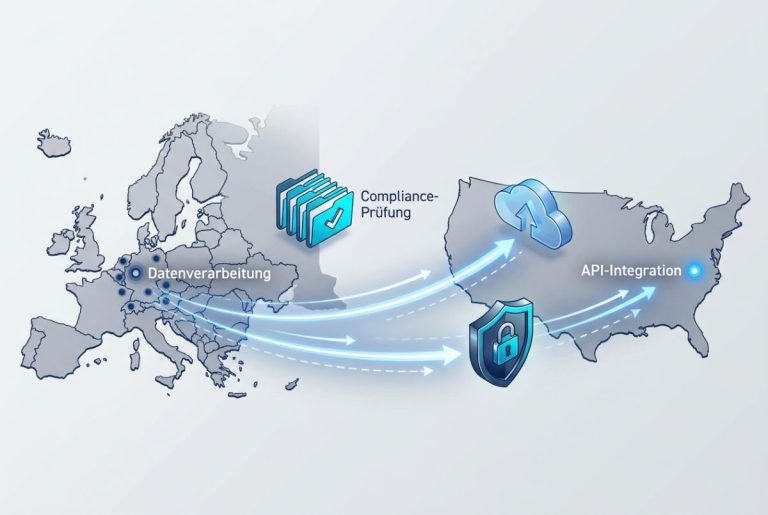
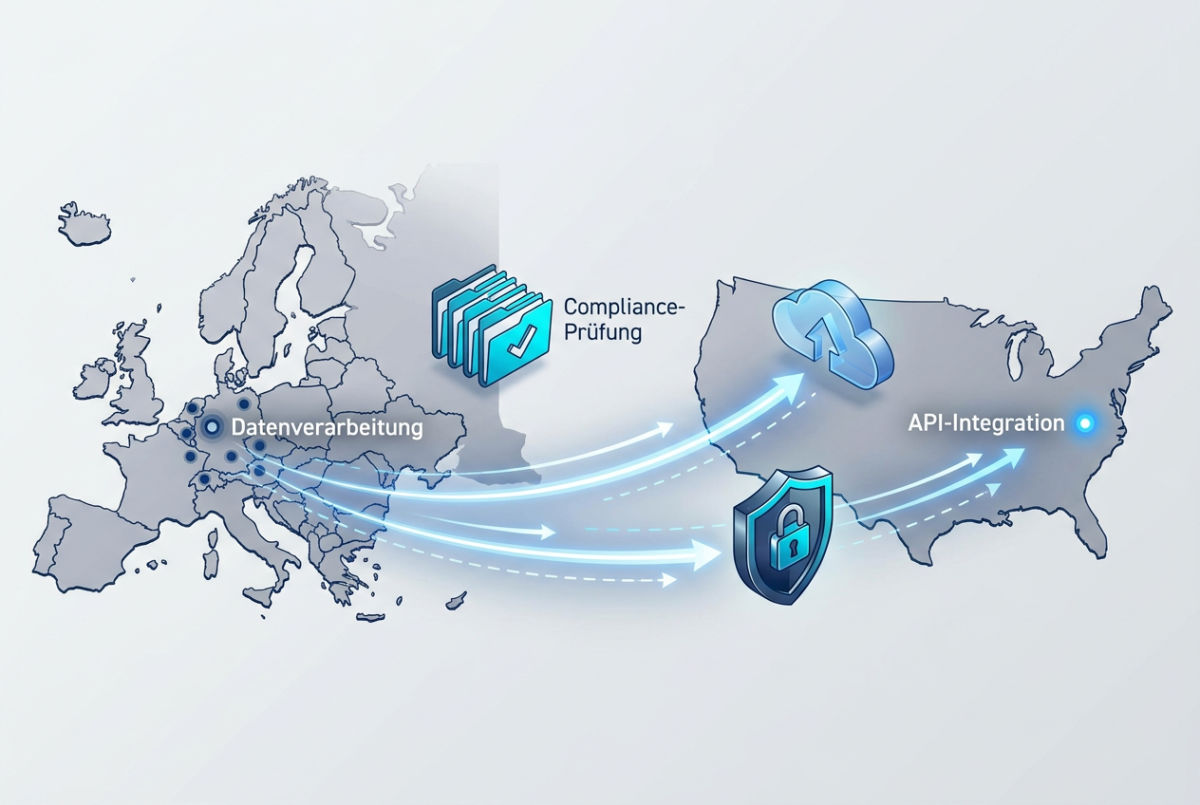
In this guide, European SaaS migration means moving business-critical workloads from a SaaS provider outside the EU/EEA, or one subject to non-EU legal access regimes, to a provider established and operated in the EU/EEA.
EU-hosted and EU-operated are not the same thing. EU-hosted only describes where the infrastructure sits, for example a data center in Frankfurt or Amsterdam. EU-operated means the entity running the service is established in the EU/EEA. Ownership and the access laws that apply to the provider still need a separate check.
The reason is the US CLOUD Act. Under 18 U.S.C. § 2713, a US provider can be ordered to disclose data in its possession, custody or control, wherever that data is stored. A US provider with a data center in Frankfurt can therefore still be subject to US legal process. You find this out by reading the DPA and the sub-processor list, not the marketing page.
Not every transatlantic data flow is unlawful, though. Since July 2023, the EU–US Data Privacy Framework allows personal data to be transferred to US companies certified under it. The General Court of the EU dismissed a challenge to the framework on 3 September 2025, and an appeal to the Court of Justice was filed on 31 October 2025.
The framework is valid today, but its two predecessors, Safe Harbor and the Privacy Shield, were both struck down. For a risk-conscious organization, that is a reasonable driver for migration: not because US transfers are banned, but because the legal basis could change.
Migration also does not have to mean full platform replacement. A phased or partial migration, moving the highest-risk data categories first and leaving lower-risk tools in place, is legitimate and often easier to defend than a blanket swap. The right scope depends on what is driving the decision, which is the first step.

A European SaaS migration runs through six stages, from naming the driver to monitoring after go-live.
Step 1: Name the Driver
Before any inventory or vendor shortlist, write down what is driving the migration.
Regulatory drivers include GDPR exposure from a specific data flow, uncertainty about the legal basis for a US transfer, and AI Act duties that depend on intended purpose, risk classification and your organizational role. Commercial and operational drivers include rising license costs, feature stagnation, or the wish to depend less on a single vendor’s roadmap.
The driver determines the scope. A compliance-driven migration is usually narrower and more urgent. It targets the specific system or data flow that created the exposure, and an audit date sets the timeline. A cost- or strategy-driven migration can be broader and phased, because no external deadline forces a quick cutover.
Document the rationale. A written record of which risk you were addressing, and why you chose a given vendor or scope, serves as evidence in future procurement decisions and when you need to show due diligence to auditors or data protection authorities.
Step 2: Inventory Systems, Data Flows and Contracts
Skipping the inventory is the most common way to end up with surprises in the middle of the project. Shadow IT is the main cause: tools adopted by individual teams without formal procurement or IT sign-off can hold data or dependencies that never made it into the migration scope. A marketing team’s analytics tool or a sales team’s personal CRM add-on often surfaces only when an integration breaks.
For every system in scope, capture the following:
- Data categories processed: personal data, special-category data under the GDPR, and data covered by sector-specific rules, assessed together with the processing context and risk
- Sub-processors involved: third parties engaged to process personal data for the vendor, as listed in the DPA or the current sub-processor list
- Integration dependencies: APIs, SSO connections, webhooks and any automation that depends on the current platform
- Contract end dates and notice periods: the formal window for terminating without penalty or automatic renewal
A simple inventory sheet is enough to start with:
| System | Business owner | Data categories | Sub-processors | Integrations | Contract end and notice period |
|---|---|---|---|---|---|
| e.g. CRM | Sales lead | Customer contacts, deal history | As per DPA | SSO, email, billing | e.g. 31 Dec, notice per contract |
It also helps to separate systems of record from systems of engagement. Systems of record, such as a CRM or ERP holding the authoritative version of customer or financial data, carry more migration risk because data integrity and historical continuity matter. For chat or meeting tools, the risk depends on data sensitivity, retention duties, integrations and how faithfully historical records have to be preserved.
Contract terms often decide the earliest possible exit date, more than technical readiness does. A contract may demand, say, 90 days’ written notice. For services covered by the EU Data Act, however, the notice period for switching can be at most two months (see Step 5). Check the clause against both.
Step 3: Evaluate European Alternatives
“European” does not automatically mean GDPR-safe. A vendor headquartered in the EU can still route data through non-EU sub-processors, keep backups outside the EEA, or belong to a parent company incorporated elsewhere. Even vendors who call themselves “fully GDPR-compliant” are describing a marketing position. Compliance is a property of how data is processed under a specific configuration and contract. Treat EU origin as the starting point for verification, and check the actual sub-processor list, data center locations and ownership structure.
Use these criteria to compare candidates:
| Criterion | Why it matters | How to check |
|---|---|---|
| Feature parity | Missing functionality is a common cause of failed adoption | Test the must-have workflows in a trial |
| Data residency | Contractual guarantees count, implied ones do not | DPA, including backup locations |
| Sub-processors and ownership | Non-EU sub-processors or parents bring the same risks back | Sub-processor list, corporate structure |
| Support and incident response | The jurisdiction of these teams affects access to your data | Contract, vendor documentation |
| Certifications | Scope and currency vary widely | Verify claims against vendor documentation |
| Pricing | Compare against the outgoing vendor, including the cost of overlap | Offer, price list |
| Export and migration tooling | Native tools reduce the complexity of Step 4 | Documentation, trial export |
A few direct questions in vendor conversations tend to bring out what marketing pages leave out. Put them in writing and ask for written answers:
- Where exactly is our data stored, including backups?
- Who are your current sub-processors, and does that list change without prior notice?
- Who owns the company, and which legal access regimes apply to it?
- What are the exit terms? Can we export our data in a usable format, and within what timeframe after termination?
You do not need to evaluate every tool category from scratch. These comparisons already exist on EuroBoxx:
- Business intelligence platforms
- CRM systems
- Video conferencing
- AI meeting assistants
- Password managers and AI writing tools
You can browse more categories in the EuroBoxx directory of European software alternatives.
Step 4: Plan Export, Transformation and Import
Check what the outgoing system lets you export before you commit to a date. Export formats vary: some platforms offer full relational exports, while others provide only flat CSV files that lose the relationships between records. API rate limits on the old system can also slow down the extraction of large datasets, particularly for systems of record with years of history. These two constraints often determine the timeline more than anything on the new platform.
Transformation is frequently underestimated. When the new platform’s schema differs from the old one, with different custom fields, workflow logic or automation rules, data cannot simply be copied. It has to be mapped and often restructured. Automation rules need to be rebuilt when the target platform does not support the same triggers, actions or fields.
A staged approach lowers the risk compared with a single hard cutover:
- Import the data into a test or sandbox environment first.
- Validate record counts, relationships, attachments and permissions against the source system.
- Test integrations and SSO against the new platform.
- Agree on a rollback plan before the production cutover.
- Run both systems in parallel for a defined validation period, so discrepancies surface while the old system is still available.
How long that parallel run should last depends on data volume and validation complexity. There is no fixed industry norm.
Step 5: Manage the Contract Exit and Data Deletion
Sequence matters more than speed in this step. Confirm and validate the migration fully before you terminate the old contract or ask the outgoing vendor to delete anything. That means record counts checked, integrations tested and user acceptance confirmed. A deletion request sent too early removes your ability to fall back on the source system if you find a discrepancy afterward.
Your right to switch under the EU Data Act
The EU Data Act (Regulation (EU) 2023/2854) has applied since 12 September 2025. For customers of “data processing services”, which includes many SaaS products, it sets rules for switching providers:
- Notice period: the contract can require at most two months’ notice to start a switch.
- Transition period: the transition to the new provider can take at most 30 days.
- Switching charges: until 12 January 2027, providers may charge only up to their direct costs. After that date, switching charges are generally no longer allowed.
There are limits. Services built individually for one customer fall under a lighter regime. Early termination penalties in fixed-term contracts can remain in place. And not every SaaS product counts as a data processing service under the Act. Read your contract, and ask legal counsel before relying on these rules in a specific case.
Deletion and records
At the end of the service, the vendor must delete or return your personal data at your choice, unless the law requires it to keep it (GDPR Art. 28(3)(g)). Ask for a deletion confirmation that says what was deleted, when, and from which systems. Where the contract specifies it, it should also say whether backups were purged or only scheduled for deletion on their normal retention cycle. The confirmation is a direct audit trail of what happened after termination, alongside your other accountability records.
Paperwork also changes with the vendor:
- Sign a DPA with the new vendor and review its sub-processor list.
- Update your record of processing activities.
- Update the data protection impact assessment where one exists.
- Update your privacy notice if recipients of personal data change.
Running two subscriptions during validation is a normal, budgetable cost of migration, not a sign of poor planning. Its length depends on how much data needs validating, how complex the integrations are, and how long the outgoing contract’s notice period keeps the subscription active regardless of readiness. Budget for the overlap in advance, and finance and procurement will have far fewer objections.
Step 6: Train Teams and Monitor After Go-Live
Technical completion and operational completion are different milestones. Technical success means the data moved correctly and the integrations work as designed. Operational success means teams actually use the new tool for their daily work instead of falling back on workarounds or shadow copies of the old system.
Define a monitoring window after cutover. During it, track integration failures, permission misconfigurations and missing or wrongly rebuilt automation logic. The window should cover normal daily use, because edge cases that cutover testing did not exercise tend to appear only then.
Training effort scales with how different the new platform’s workflow logic is, not with how European the vendor is. A tool with a similar interface and logic needs comparatively light onboarding. A tool with a different data model or permission structure needs structured training and a named internal contact, typically the project owner or IT lead, who triages and tracks issues until the monitoring window closes.
How Long Does a European SaaS Migration Take? An Illustrative Example
No timeline fits every project. The following example is illustrative, not a benchmark. It shows how a mid-sized team might move a CRM, and the durations will differ with data volume, integrations and how much the platforms differ.
| Phase | What happens | Illustrative duration |
|---|---|---|
| Steps 1–2 | Name the driver, build the inventory | 2 weeks |
| Step 3 | Shortlist, vendor questions, trial | 4 weeks |
| Step 4 | Export, mapping, sandbox import, tests | 4 weeks |
| Step 4–5 | Parallel run and validation | 4 weeks |
| Step 5 | Notice period and deletion | Up to 2 months notice under the Data Act, plus up to 30 days for the transition |
| Step 6 | Training and monitoring window | 2–4 weeks |
What generalizes is the sequence and the hard limits: for in-scope services, the contract cannot hold you to more than two months’ notice and a 30-day transition. Everything else depends on your data and your integrations.
Is a Full European SaaS Migration Always the Right Goal?
Not necessarily. A hybrid approach is defensible when a documented risk assessment prioritizes the higher-risk processing and confirms that every retained tool remains lawful and adequately protected. It lets an organization show that it set priorities deliberately, instead of claiming an all-or-nothing compliance position that may not hold for every system.
The same logic applies to timing. A migration squeezed into a few weeks under deadline pressure carries more operational risk than one planned within a normal budget cycle, and the inventory step is usually the first thing to be compressed. If you only have time for part of the work, protect the inventory and the validation, and narrow the scope instead.
Frequently Asked Questions
Does moving to a European SaaS provider automatically guarantee GDPR compliance?
No. Provider origin alone neither guarantees GDPR compliance nor removes foreign-access risk. Data flows, sub-processors, security, transfer mechanisms and contracts still need to be verified.
Do I have a legal right to switch SaaS providers in the EU?
For many SaaS products, yes. Since 12 September 2025, the EU Data Act limits the notice period for switching to two months and the transition period to 30 days. Switching charges are capped at the provider’s direct costs until 12 January 2027 and generally no longer allowed after that. Individually built services and some fixed-term contracts are treated differently, so check your contract.
How long does a typical European SaaS migration take?
It depends on data volume, the number and complexity of integrations, how different the new platform’s data model and workflows are, and the contractual exit terms. The example above shows how the phases add up. For services covered by the Data Act, the contractual exit window is capped at two months’ notice and 30 days’ transition.
Is the EU–US Data Privacy Framework still valid?
It was valid at the time of writing. The General Court dismissed a challenge to it in September 2025, and an appeal is pending at the Court of Justice. Earlier frameworks were struck down, so organizations that depend on US transfers should keep an eye on the case and have a fallback such as standard contractual clauses.
Can migration be done without downtime?
A parallel run, operating both systems side by side during validation, is a common way to reduce the risk of downtime and data loss. It is a mitigation, not a guarantee. Cutover events, especially for systems of record with complex integrations, carry some residual risk that should be planned for instead of assumed away.
Sources
- Regulation (EU) 2023/2854 (Data Act), EUR-Lex
- Regulation (EU) 2016/679 (GDPR), EUR-Lex
- Commission Implementing Decision (EU) 2023/1795 on the EU–US Data Privacy Framework, EUR-Lex
- 18 U.S.C. § 2713, Legal Information Institute (Cornell)
- Alston & Bird: EU Data Act switching requirements for cloud services (September 2025)
- WilmerHale: European Court of Justice to review challenge to the EU–U.S. Data Privacy Framework (December 2025)
This guide provides general information and is not legal advice. Have your legal counsel or data protection officer review the specifics of your contracts and data flows.