

What Makes a BI Tool 'European'?
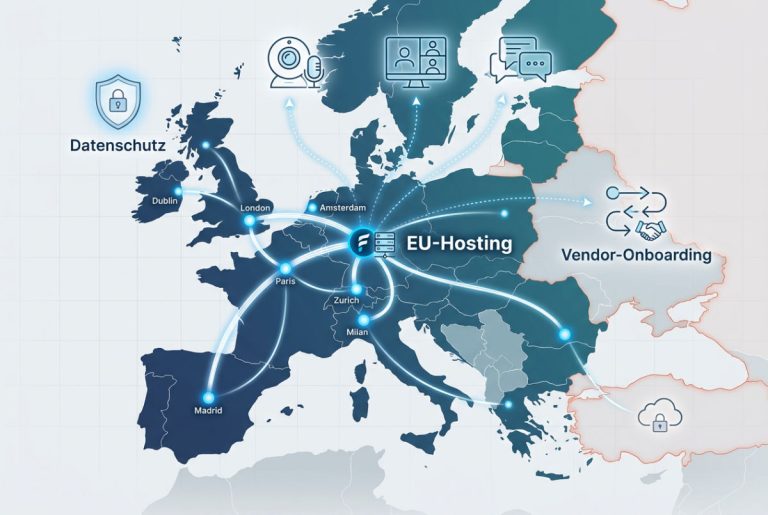
There is no legal definition of a "European" BI tool. In practice, the term describes vendors established in the EU or EEA that contractually keep hosted data there. Three factors decide what that label is worth: where the company is headquartered, which law it operates under, and where the data is actually processed – including by subprocessors, support teams, and integrations.
This is a different question from GDPR compliance. A US-based BI vendor can offer a fully GDPR-compliant contract. Since July 2023, transfers to US companies certified under the EU–US Data Privacy Framework (DPF) can rely on the European Commission's adequacy decision; for uncertified recipients, Standard Contractual Clauses (SCCs) plus a transfer impact assessment are the standard route. Both mechanisms make the transfer lawful. Neither changes US law: under the CLOUD Act, a US provider can be compelled to disclose data within its possession, custody, or control, even if that data sits in a Frankfurt data center.
An EU-based vendor avoids this exposure only if its whole processing chain stays in the EEA. A European BI company that runs on a US hyperscaler, uses a US support tool with access to customer data, or routes AI features through a US model API brings part of the same question back in.
For BI platforms, all of this carries more weight than for most SaaS categories. A dashboard tool doesn't process one type of data – it aggregates sales figures, customer records, and financial reporting into a single view. Unauthorized access to that system exposes the core of the business at once, which is why hosting, access controls, encryption, and the processing chain deserve a closer look here than for a scheduling app.
Why Businesses Are Looking for European BI Alternatives

- Data concentration risk: BI platforms pull a company's most sensitive datasets – revenue, customer behavior, financial forecasts – into one system. A breach or a government access request affecting that system has far larger consequences than one affecting a single-purpose tool.
- Ecosystem lock-in: Power BI is built around Microsoft's Azure and Microsoft 365 stack, Looker belongs to Google Cloud, and Tableau is part of Salesforce. The BI decision often comes with a commitment to the surrounding ecosystem, which raises switching costs later.
- Procurement requirements: Some public-sector tenders and regulated organizations require EU-only processing or specific sovereignty terms. Vendors that cannot contractually commit to them are excluded from the start.
- Client and partner expectations: Clients in regulated sectors increasingly ask their service providers for proof of EU-only data handling as a condition of doing business, independent of what the law strictly requires.
This isn't limited to large, regulated enterprises. An SME without legal residency obligations can use a US-based BI tool lawfully, provided it has a data processing agreement under Article 28 GDPR and a valid transfer mechanism – typically DPF certification or SCCs. What remains is the jurisdictional exposure of the US parent company. Some organizations accept that as a documented residual risk; others prefer to remove it by choosing an EU vendor.
What to Look for in a European BI Tool
Marketing terms like "EU availability zone" tell you where a server region is. They don't tell you who owns the infrastructure or where the rest of the processing chain runs.
Useful evaluation criteria include:
- Named hosting location: Ask for the specific country and data center. "Frankfurt" can be written into a contract and checked; "EU region" leaves the vendor free to move data between countries.
- Parent company jurisdiction: A data center in Germany owned by a US-headquartered company remains within reach of US legal process through the parent. Ownership structure matters as much as server location.
- Integration routing: Confirm that connections to your CRM, ERP, or accounting systems – for example DATEV-compatible tools – don't pass data through third-country infrastructure as an intermediate step, even when final storage is in the EU.
- Subprocessors and support access: Ask for the full subprocessor list and for the countries from which support staff can access customer data. Remote access from outside the EEA counts as a transfer.
- Certifications: ISO 27001 or national schemes such as Germany's BSI C5 are worth asking about. Verify the current certificate with the vendor rather than relying on a website badge.
- Self-hosting or on-premise options: Self-managed deployment puts the hosting location under your control. Telemetry, external support, integrations, and update services still need the same review as any SaaS subprocessor.
Whether EU hosting should outrank features depends on your situation. A public-sector body with a sovereignty mandate has no room to negotiate. A mid-sized company without regulatory pressure may reasonably prioritize a more mature feature set and cover the transfer question with a solid contract.
European BI Tools vs. US Hyperscaler Tools – A Fair Comparison
Comparing European BI tools with Power BI, Tableau, or Looker means answering two separate questions: which tool is more capable, and which one fits your compliance requirements.
On capability, the established US platforms have the broader ecosystems. Power BI's integration with Microsoft 365, Tableau's depth in visualization, and Looker's SQL-based semantic modeling reflect years of investment and large partner and extension marketplaces. European vendors compete on a narrower front – often on usability for specific use cases, local-language support, and EU-only processing commitments. Where exactly a given product stands needs to be tested in a demo with your own data.
On compliance, the difference is structural. Some hyperscalers now offer EU data boundary commitments, such as Microsoft's EU Data Boundary, which keep most customer data processing within the EU. These commitments reduce transfers, but they don't change the CLOUD Act exposure of the US parent. A European vendor with an EEA-only processing chain removes that exposure – provided its subprocessors and support access are EEA-only as well.
| Your situation | Leaning | Why |
|---|---|---|
| Contract, tender, or regulator requires EU-only processing | European tool | A US parent cannot contractually exclude US legal process |
| Organization runs on Microsoft 365 or Google Workspace, no residency obligation | US platform | Native integration saves effort; DPF or SCCs cover the transfer |
| Wide range of third-party connectors and extensions needed | US platform | Larger marketplaces and partner ecosystems |
| Reporting on client data for clients in regulated sectors | European tool | Simplifies the proof of EU-only handling that clients ask for |
| Internal IT team, maximum control required | Self-hosted tool | Hosting location under your own control, at the cost of maintenance effort |
Common Use Cases Where European BI Tools Fit Well
Some scenarios make the case for a European BI tool especially clear:
- Financial reporting and controlling, where laws, contracts, or audit requirements restrict processing to defined jurisdictions and the data trail from source to report has to be documented.
- Customer analytics built on CRM data, particularly when the CRM has already been chosen from EU-compliant CRM alternatives. BI sits downstream of that decision, and a US BI layer would reopen the question the CRM choice had closed.
- Public-sector and government-adjacent work, where tender terms or governing law explicitly impose data-sovereignty requirements.
How European BI Tools Fit Into a Broader GDPR-Ready Software Stack
A BI tool rarely works in isolation. It pulls data from CRM systems, project management tools, and sometimes communication platforms, and its GDPR position depends on every system in that chain. Replacing the BI layer while a non-EU CRM keeps feeding it doesn't remove the transfer question – it moves it one step upstream.
A complete review therefore covers the adjacent categories too: the CRM supplying customer data, the video conferencing tool used for client reporting sessions, and the password manager securing access to dashboards and admin accounts.
AI features add a separate layer. Natural-language queries, automated insights, and forecasting are standard in modern BI platforms and usually fall into the AI Act's lower risk tiers. That changes when BI output drives decisions about people: scoring used for hiring, promotion, or performance monitoring, or for assessing individuals' creditworthiness, falls into the high-risk categories of Annex III. How to assess this systematically is covered in our guide to EU AI Act compliance in European AI software.
Getting Started: How to Evaluate a European BI Tool
A structured process works better than comparing vendor websites:
- Define your residency requirement first. Clarify whether it's a legal obligation, a contractual client requirement, or an internal risk preference. The answer determines how strict the vendor criteria need to be.
- Map your current data flows. List which systems feed your BI tool today and where that data lives. Without this map, you can't tell whether a new tool closes the residency gap or just shifts it.
- Request the DPA with named server locations and the full subprocessor list. Treat vague regional claims as a point to negotiate, not as an answer.
- Pilot with a non-critical dataset. A pilot surfaces integration issues and usability gaps before sensitive reporting moves to the new system.
- Test the integrations with your existing EU-based tools, including CRM and accounting systems, and confirm no data passes through third-country infrastructure along the way.
To build a shortlist, you can browse EuroBoxx's directory of European software alternatives and then request demos from the vendors that match your criteria.
Frequently Asked Questions
Are European BI tools as powerful as Power BI or Tableau?
In ecosystem breadth and number of integrations, the established US platforms lead. European alternatives compete on EU-only processing, local-language support, and often simpler setups for specific use cases. For your requirements, a demo with your own data is more reliable than any general comparison.
Can a US-based BI tool be used in a GDPR-compliant way?
Yes. You need a data processing agreement under Article 28 GDPR and a valid transfer mechanism – DPF certification of the vendor or SCCs with a transfer impact assessment. What these don't remove is the possibility of US authorities requesting data from the US parent under the CLOUD Act. Whether that residual risk is acceptable depends on your data and your contractual obligations.
Do European BI tools cost more than US alternatives?
Pricing depends on the vendor, licensing model, and number of users rather than on geography. Also compare the total cost: bundled licenses, for example Power BI in some Microsoft 365 plans, can make a US tool look cheaper than it is once additional capacity or connectors are needed.
Is self-hosted BI software a realistic alternative?
For organizations with their own IT team, yes. Self-hosting puts the deployment location under your control. In return, you take on maintenance, security patching, and support, and telemetry, update services, and external integrations still need to be reviewed.
What’s the first step in switching to a European BI provider?
Mapping your current data flows: which systems feed the existing BI tool and where that data lives. With this map, you can check whether a replacement actually closes the residency gap.